
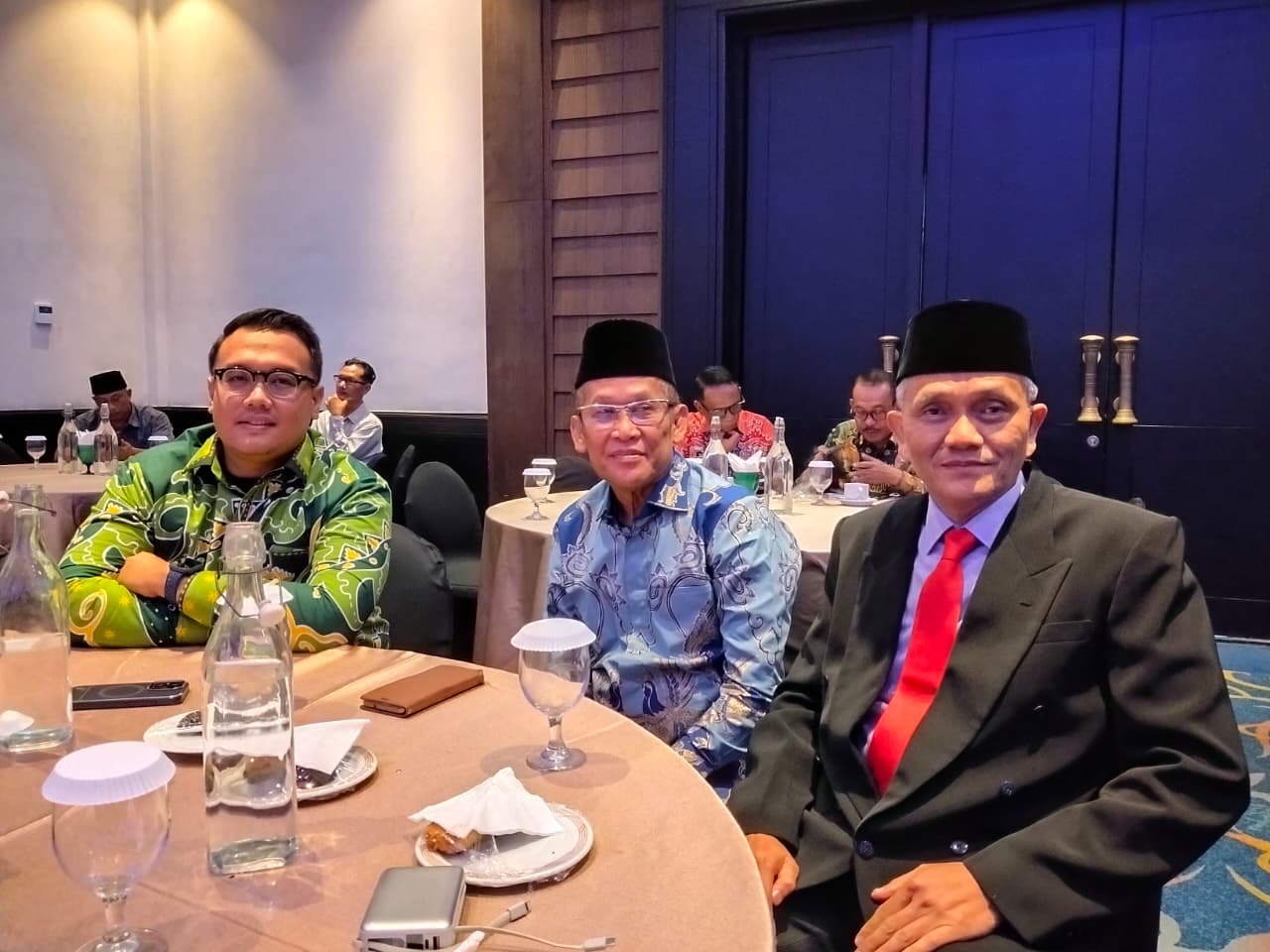
KH. Suryani M. Nur
A Chairman, Indonesian Council of Ulama (MUI), Lampung Province, Indonesia
I have received an invitation to be a participant at the International Ulama Seminar, organized by Yayasan Darul Fattah Lampung (Indonesia) and Risalah Salam Foundation (Egypt), which will be held at Emersia Hotel at Saturday, April 25, 2026
In discussing the urgency of correcting religious discourse, we must begin from the social reality in which that discourse operates. In the case of Lampung Province, this reality is both complex and promising. Lampung is not merely a peripheral region of Indonesia, it is a dynamic socio-cultural space where diversity, economic growth, and religious life intersect.
Recent data show that Lampung’s economy continues to grow steadily, reaching 5.28% in 2025, with a Gross Regional Domestic Product of over Rp 523 trillion. This growth is driven largely by agriculture, manufacturing, and trade sectors, with agriculture alone contributing more than a quarter of the regional economy. At the same time, Lampung’s Human Development Index has reached 73.98, placing it in the “high” category and reflecting a steady improvement in quality of life.
Yet, beyond these encouraging indicators lies a deeper sociological reality. Lampung is one of Indonesia’s most diverse provinces, shaped significantly by the historical transmigration program. Today, its population consists of a rich mosaic of ethnic groups, including indigenous Lampungese and large communities of Javanese migrants. This diversity, while a source of strength, also requires careful social and religious management to maintain harmony.
In such a plural and evolving society, religious discourse becomes critically important. It is not only a matter of theology, it is a matter of social cohesion. When religious messages are conveyed with wisdom, they strengthen unity. But when distorted, they risk fueling division. From a Qur’anic perspective, this distortion contradicts the essence of Islam. The Qur’an calls Muslims ummatan wasathan, a community of balance and moderation. This principle is particularly relevant in Lampung, where diversity is not theoretical but lived reality. The values of justice (al-‘adl), compassion (rahmah), and tolerance (tasamuh) must therefore be reflected in every form of religious communication.
However, the challenge we face today is the rise of religious extremism. This phenomenon often emerges from superficial religious understanding, excessive group fanaticism, and literal interpretations of sacred texts that ignore context. In a region like Lampung where economic growth is accompanied by rapid social change, such tendencies can easily disrupt social stability if left unaddressed. The digital era has further intensified this challenge. Religious messages now spread instantly, often without verification. In many cases, authority is replaced by popularity, and scholarship is overshadowed by rhetoric. This creates a fertile ground for misunderstanding and polarization.
This is precisely why the role of the Majelis Ulama Indonesia at the provincial level becomes increasingly vital. In Lampung, MUI is not merely an institution, it is a guardian of religious integrity and social harmony. Through its fatwas, MUI provides clear and authoritative guidance on contemporary religious issues, ensuring that Islamic teachings are understood within their proper context. In a rapidly changing society, such guidance is essential to prevent confusion and deviation.
Equally important is MUI’s role in strengthening religious literacy. In Lampung, where educational development continues to improve alongside economic growth, the need for deep and contextual religious understanding is more urgent than ever. MUI’s involvement in seminars, community outreach, and scholarly engagement helps build a more informed and resilient Muslim society. Moreover, MUI in Lampung actively collaborates with local government and educational institutions to promote religious moderation. This synergy is crucial in a province where economic expansion, especially in sectors like agriculture, trade, and services, brings increased mobility, interaction, and potential social friction.
In the public sphere, especially in the digital space, MUI also serves as a moral compass. By clarifying misleading information and guiding public discourse, it helps ensure that religion remains a source of peace rather than conflict. It is important to emphasize that correcting religious discourse is not about limiting freedom of expression. Rather, it is about safeguarding the essence of religion itself. It is about ensuring that religion continues to function as a force for unity, especially in regions like Lampung where diversity and development go hand in hand.
The Province of Lampung, with its steady economic progress, improving human development, and rich cultural diversity, holds great potential to become a model of harmonious religious life in Indonesia. However, this potential can only be realized if religious discourse is guided by knowledge, wisdom, and responsibility. In this context, the role of the Majelis Ulama Indonesia is not optional, it is indispensable. By continuing to promote moderation, strengthen literacy, and foster collaboration, MUI ensures that Islam remains truly rahmatan lil ‘alamin, a mercy for all.
Wallahu A’lam Bishawab.
